

godswill__a
Discussion host
Challenge Theme: Preparedness Before the Emergency
Opening Reading: Pages 1 through 11
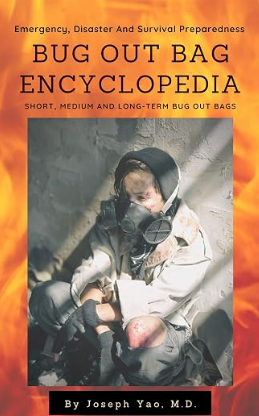
The PDF of Bug Out Bag Encyclopedia was shared with the group three days ago, so everyone has already had some time to access the book and get settled with the reading. I am opening the discussion thread now so we can begin working through the book together rather than simply reading it individually and moving on.
For this first discussion, we are staying with pages 1 through 11.
We are deliberately beginning here because these pages give us the foundation for everything that follows. Before the book gets deeply into individual equipment and survival categories, it asks us to think about why we prepare, what we are actually preparing for, how much we can reasonably prepare for, and what decisions are better made while life is still calm than when circumstances have already become difficult.
The interesting thing about this opening is that the subject is not really just a bag. The author presents the BOB as something that has to be customized according to circumstances. Location matters. The expected duration of an emergency matters. The number of people being prepared for matters. Physical condition matters. Cost matters. Weight and space matter. Even whether someone expects to stay where they are or may have to leave can change what makes sense.
The book also makes clear that readers should not interpret the long lists that come later as instructions to buy everything mentioned. The purpose is to give readers ideas and help them think through what fits their own circumstances. That gives us something much more interesting to discuss than whether we personally like bug out bags.
Some of us may already have emergency supplies. Some may have never seriously thought about preparedness. Some may think a ready-made bag is a sensible starting point, while others may prefer building everything from scratch. Some may think carrying more gives you security, while others may immediately think about the physical burden of carrying too much. Those differences are welcome here.
This is not a thread where everyone needs to arrive at the same conclusion. As you read, pay attention to the moments where the book makes you reconsider something you normally take for granted. Think about the things in everyday life that are available so consistently that we rarely stop to consider what happens if they suddenly are not.
Think about decisions you would rather make now, while you have time, information and a clear head, than make for the first time while frightened, rushed, displaced, or responsible for someone else.
There is also a tension running through these opening pages that I want us to keep returning to: Preparation can give us more options, but preparing for every possible situation is impossible.
So the real question may not be how to eliminate uncertainty. It may be how to decide what deserves our attention before uncertainty arrives.
I also want this to be a practical reading conversation, not just a place where everyone posts a short review.
If something in these pages makes you want a practical example, a clarification, a comparison, a checklist, a worksheet, a demonstration, a recommendation, or another resource that would help you understand the idea better, ask for it.
If you have a question that you think only Joe can properly answer, bring it into the discussion. If you think an idea in the book would be easier to understand if we could see how it works for a real situation, say so.
And if several readers reach the same point where something more would genuinely help, we can identify that together and put the question to Joe.
That does not mean every request has to be fulfilled or that the author is expected to provide something simply because we ask. It means we should not limit our discussion to what is already printed on the page. If the book creates a genuine need for something additional, it is worth saying so.
Joe has also made it clear that he welcomes favorable and unfavorable observations. So disagreement is completely acceptable here. If something feels unrealistic, explain why. If you think a recommendation depends too heavily on a particular situation, point that out. If another reader sees something differently, engage with their reasoning.
The strongest discussion may not be the one with the most praise. It may be the one that makes us ask better questions.
And if a question naturally belongs with the author, we can collect those questions as we continue reading and use them for the written Q&A later.
Tell us what the book made you think about, question, reconsider, or want to learn next.
View the book on Amazon