Catherine E. Aponte PsyD
September Selection
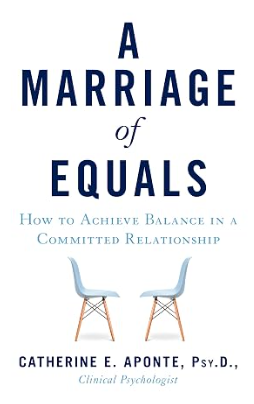
A Marriage of Equals: How to Achieve Balance in a Committed Relationship
A September selection queued for reading with the discussion thread already open.
Book link pending from the author
Go to the discussionNeophyte author badge, legacy record
About the author
About Catherine E. Aponte PsyD
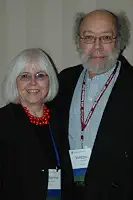
CATHERINE APONTE is a clinical psychologist who is married to a clinical psychologist, Joseph F. Aponte. They married in 1960, a time of significant social change. Joe had his Ph.D. and Catherine had a BS when they moved to Chapel Hill, NC in 1970, where Joe took his first job. It was at this time that Catherine decided she wanted to go graduate school in Psychology. This created a problem for them because Joe had earned his degree and was ready to begin his career in psychology. By this time, his status and earning power were higher than Catherine’s, and would remain so. What this meant to her and most women in this situation, was that what she wanted to do was limited to some degree by her husband’s greater earning power and by a late start on a career.
Aponte and her husband embarked upon a marital journey guided by the basic principle that neither one of their careers was more important than the other’s. Catherine earned her doctoral degree in psychology and has had a successful private practice of psychology working primarily with couples. Joe took an academic route.
This book is based on Catherine’s lived experience during the feminist revolution of the 70’s with her loving and supportive husband, her excellent training as a psychologist at the University of Florida, Duke University, and Spalding University, and as a practicing psychologist working with couples for over 30 years in Louisville, KY. Aponte was awarded a USPHS Traineeship covering the 4 years she was a graduate student at Duke University.
This book is written for young couples who are beginning their marriages with an historically unprecedented belief that there are not inherently male or female prescribed roles for being good husbands and wives. Unfortunately, the jury is still out on the question of whether young couples will be able to sustain this commitment to gender equality in marriage. Despite the entrance of women into the workforce and the blurring of once clearly defined gender boundaries, the demands of balancing parenting and work, autonomy and commitment, and time and money are largely unresolved creating what one sociologist described as “unfinished revolution.” Aponte’s goal is to help young people finish the revolution of achieving an equitable and committed marriage.
During Aponte’s professional career both as a clinician in private practice and an adjunct professor of clinical psychology at Spalding University, she made numerous presentations about her work with couples, including her theory about the dynamics of an equitable marital relationship. She chaired eight doctoral dissertations testing her theoretical model of relationships. She has a blog on Psychology Today,” and has maintained a social media presence on Facebook (A Marriage of Equals), Twitter, LinkedIn, and Pinterest. The website for the book is www.marriageofequals.com. She regularly conntributes letters to the editor of the Courier-Journal in Louisville, related to gender issues. Both her master’s thesis at Duke University and her doctoral thesis at Spalding University focused on gender and marriage.
Aponte has participated in various professional activities during her career such as chairing a State-wide conference on the shared responsibilities of work and family; participating in a radio panel on the Shriver Report on the status of women; chairing the Gender Issues Committee for the Kentucky Psychological Association; participating in The Third Path Institute, a group working to support sharing parental care; and heading up a residential living program for chemically dependent women.
Throughout her career as a clinical psychologist, Catherine has been devoted to helping couples co-create a committed and equitable marriage because: (1) women will not achieve equality in society as a whole if they live in a gender-defined relationship; (2) women today are more likely not to marry than to live in a traditional marriage; (3) having a good relationship in the context of marriage is good for us as individuals and good or our society; (4) having both mother and father equally invested (equal joy and equal sacrifice) in raising their children is good for everyone; and (5) she wants to share with the reader her experience of having a committed and equitable marriage.
Member discussion
Reader conversation on A Marriage of Equals: How to Achieve Balance in a Committed Relationship
Comments are written by members of The Reading Atelier. They are reader responses, not reviews, ratings, or endorsements.
- Loading the conversation.
Members sign in to take part in this conversation.
Sign in to commentPlacement in this record does not imply a review, rating, award, or endorsement. Reader comments belong to the members who wrote them.